

Big Banks Turn Fed Stress-Test Passes Into Buybacks and Higher Dividends
All 32 large U.S. banks cleared the Federal Reserve's 2026 stress test, and several quickly followed with larger dividends or new buyback plans. The result matters for bank investors because capital strength is being converted into shareholder returns, even as regulators debate how tough future stress tests should be.
Pending review
This article is in WireNorth's review workflow and may include AI-assisted research, drafting, or formatting. Pending articles are not eligible for search indexing until editor review is complete.
Editorial standards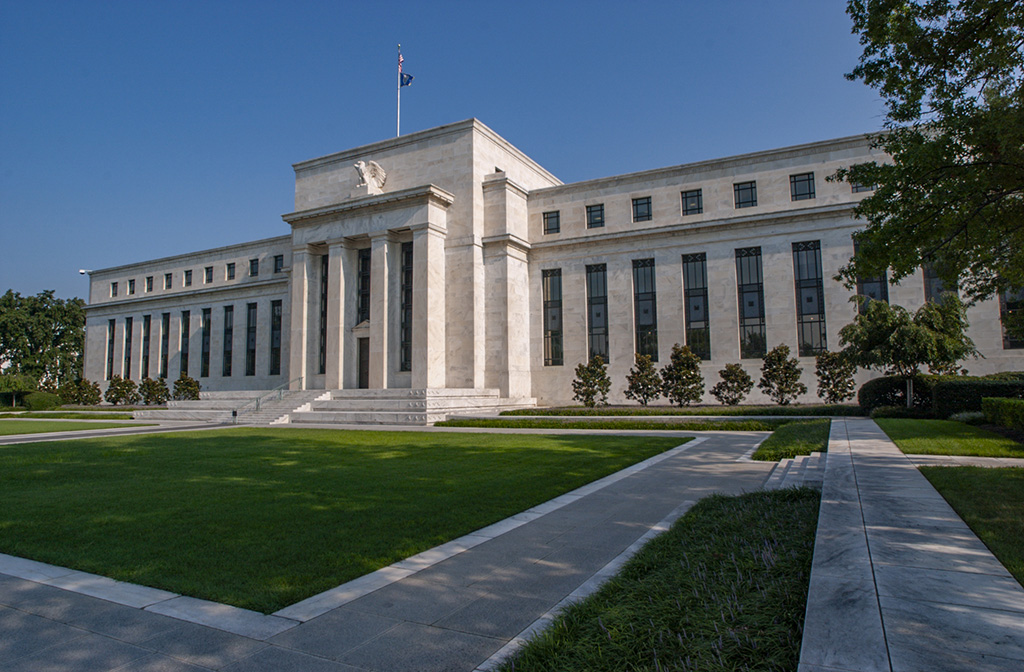
Why it matters
All 32 large U.S. banks cleared the Federal Reserve's 2026 stress test, and several quickly followed with larger dividends or new buyback plans. The result matters for bank investors because capital strength is being converted into shareholder returns, even as regulators debate how tough future stress tests should be.
The largest U.S. banks passed the Federal Reserve's 2026 stress test, then moved quickly to show investors what that capital cushion is worth: higher dividends and large share buyback authorizations.
The Fed said all 32 banks in this year's test stayed above minimum common equity tier 1 capital requirements in a hypothetical severe recession. Under that scenario, banks would absorb more than $708 billion in total loan losses while their aggregate CET1 capital ratio fell 1.6 percentage points, from 12.8% to 11.2%.
For bank investors, the practical answer is that the stress-test result is no longer just a safety signal. It is also a capital-return signal. JPMorgan Chase authorized a new $50 billion common-share repurchase program and said it intends to raise its quarterly dividend to $1.65 a share from $1.50. Morgan Stanley said it will lift its quarterly dividend to $1.15 from $1.00 and reauthorized a $20 billion multi-year buyback program.
| Bank or measure | What changed | Why it matters |
|---|---|---|
| Fed stress-test group | All 32 large banks stayed above minimum CET1 requirements under the severe scenario. | The result supports the Fed's view that large banks can keep lending through a deep downturn. |
| Hypothetical losses | More than $708 billion in total loan losses, according to the Federal Reserve. | The test still assumes heavy credit damage, even though the aggregate capital drawdown was modest. |
| Aggregate CET1 ratio | Fell from 12.8% to 11.2%, a 1.6 percentage-point decline. | A smaller capital hit gives banks more room to return money to shareholders. |
| JPMorgan Chase | New $50 billion buyback authorization effective July 1, 2026; planned dividend increase to $1.65 a share. | Shows the biggest U.S. bank by assets is comfortable returning capital after the test. |
| Morgan Stanley | Dividend increase to $1.15 a share and reauthorization of a $20 billion multi-year buyback. | Signals capital flexibility at a major wealth-management and investment-banking franchise. |
| Citigroup | 12% quarterly dividend increase to $0.67 a share while continuing its $30 billion stock repurchase program. | Ties Citi's turnaround story to a stronger capital-return message. |
Why the 2026 bank stress test matters now
The Fed's annual stress test is designed to answer a basic question: could the biggest banks keep lending if the economy turned sharply worse? This year's severely adverse scenario included unemployment rising to 10%, a 39% decline in commercial real estate prices, a 30% drop in house prices and a 58% stock-market decline, according to the Fed and AP.
That backdrop gives the bank payout announcements their significance. Buybacks and dividends are not being raised after a benign internal forecast; they are being raised after regulators tested banks against a deep hypothetical recession. The second-layer insight is that bank capital has become a bridge between financial-stability policy and shareholder returns.
AP reported that the stress test applies only to systemically important banks and that weak performance can limit a bank's ability to pay dividends or repurchase shares. Passing the test therefore gives investors a clearer view of which banks have enough regulatory room to distribute capital without immediately raising safety concerns.
Who benefits from larger bank payouts
The first beneficiaries are shareholders in the large banks announcing higher dividends and buybacks. A dividend increase raises cash income for investors who hold the stock, while a buyback can support earnings per share by reducing the share count if executed at reasonable prices.
The signal also matters for bank-stock sentiment. Reuters reported that major banks announced dividend increases after the Fed results, including Goldman Sachs, Citigroup and Morgan Stanley, while JPMorgan unveiled its $50 billion repurchase plan and Morgan Stanley authorized a $20 billion program. Bank of America maintained its $40 billion stock repurchase program and said it would determine its next dividend after a board meeting, according to the Reuters report.
For customers and borrowers, the read is more indirect. The Fed framed the result as evidence that large banks are well positioned to weather a severe recession and continue lending to households and businesses. That does not guarantee easier credit, but it reduces the near-term concern that the largest banks are capital-constrained.
The caveat is the test itself is changing
There is an important limitation for readers: a clean pass does not settle the debate over stress-test toughness. The Fed said this year's results will not affect large-bank capital requirements and that current requirements will stay in place until 2027, when the test will be run with loss-estimating models that take public feedback into consideration.
That makes 2026 an unusual transition year. WSJ reported that banks passed an easier annual stress test after regulators began disclosing more about models and scenarios in advance, while critics have argued that added transparency could weaken the test's rigor. The Fed's position is that public feedback can improve accountability and confidence.
Investors should therefore separate two points. The current results show large banks have substantial capital under this year's assumptions. They do not prove future losses would be mild, and they do not prove that the next version of the stress-test framework will be viewed as equally strict by regulators, banks and investors.
What to watch next
The first checkpoint is execution. Buyback authorizations are permission, not a promise to repurchase every share immediately. JPMorgan said the timing and amount of repurchases under its new authorization will be subject to management discretion and market conditions. Investors should watch actual repurchase pace, dividend approvals and capital-ratio updates in second- and third-quarter bank earnings.
The second checkpoint is loan growth and credit quality. A strong stress-test result is more valuable if banks can keep lending profitably without a sharp rise in delinquencies, charge-offs or commercial real estate losses. Bank earnings calls should show whether management teams are using excess capital mainly for shareholder returns, loan growth, acquisitions or balance-sheet defense.
The final checkpoint is the 2027 stress-test redesign. If the Fed's public-feedback process produces a framework banks view as predictable and investors view as credible, capital planning may become more stable. If the process is seen as too soft, the immediate shareholder-return win could come with a longer-term credibility discount for bank regulation.
Sources & further reading
- Federal Reserve Board's annual bank stress test confirms that large banks are well positioned to weather a severe recession and able to continue to lend to households and businessesFederal Reserve Board
- Dodd-Frank Act Stress Tests 2026Federal Reserve Board
- All 32 of the nation's biggest banks clear the Fed's annual 'stress test'Associated Press
- Banks increase dividends after Fed stress test resultsReuters via New Orleans CityBusiness
- Big Banks Ace an Easier Annual Stress TestThe Wall Street Journal
- JPMorganChase Plans Dividend Increase and Has Authorized a New Common Share Repurchase ProgramJPMorganChase
- Morgan Stanley Announces a Dividend Increase of 15 Cents to $1.15 Per Share and the Reauthorization of a $20 Billion Multi-Year Common Equity Share Repurchase ProgramMorgan Stanley
- Citi Announces Completion of Annual Supervisory Stress Test ProcessCitigroup
- History of the Marriner S. Eccles Building and William McChesney Martin Jr. BuildingFederal Reserve Board
Recommended reads

July Minimum-Wage Raises Give Workers a Clear Paycheck Checkpoint
Alaska, Oregon, the District of Columbia, California health care employers and more than 20 local jurisdictions have July 1 minimum-wage changes. The raises are targeted rather than nationwide, but they give covered workers a concrete pay floor to check and give small employers a practical payroll deadline.
Read analysis
New State PBM Rules Put Pharmacy Access Ahead of Quick Drug-Price Promises
States are moving against pharmacy benefit managers with transparency, rebate and reimbursement rules, a change that may help local pharmacies and patients compare costs more clearly even if lower out-of-pocket prices are not guaranteed.
Read analysis