

Google's $1.5B Alabama Data Center Expansion Puts Power Costs at Center Stage
Google plans to invest $1.5 billion through 2027 to expand its Jackson County, Alabama data center campus on the former Widows Creek coal-plant site. The regional finance story is whether the company's pledged power-cost coverage, new generation commitments and local energy-efficiency fund can make a rural AI-infrastructure buildout grow without shifting costs to nearby households.
Pending review
This article is in WireNorth's review workflow and may include AI-assisted research, drafting, or formatting. Pending articles are not eligible for search indexing until editor review is complete.
Editorial standards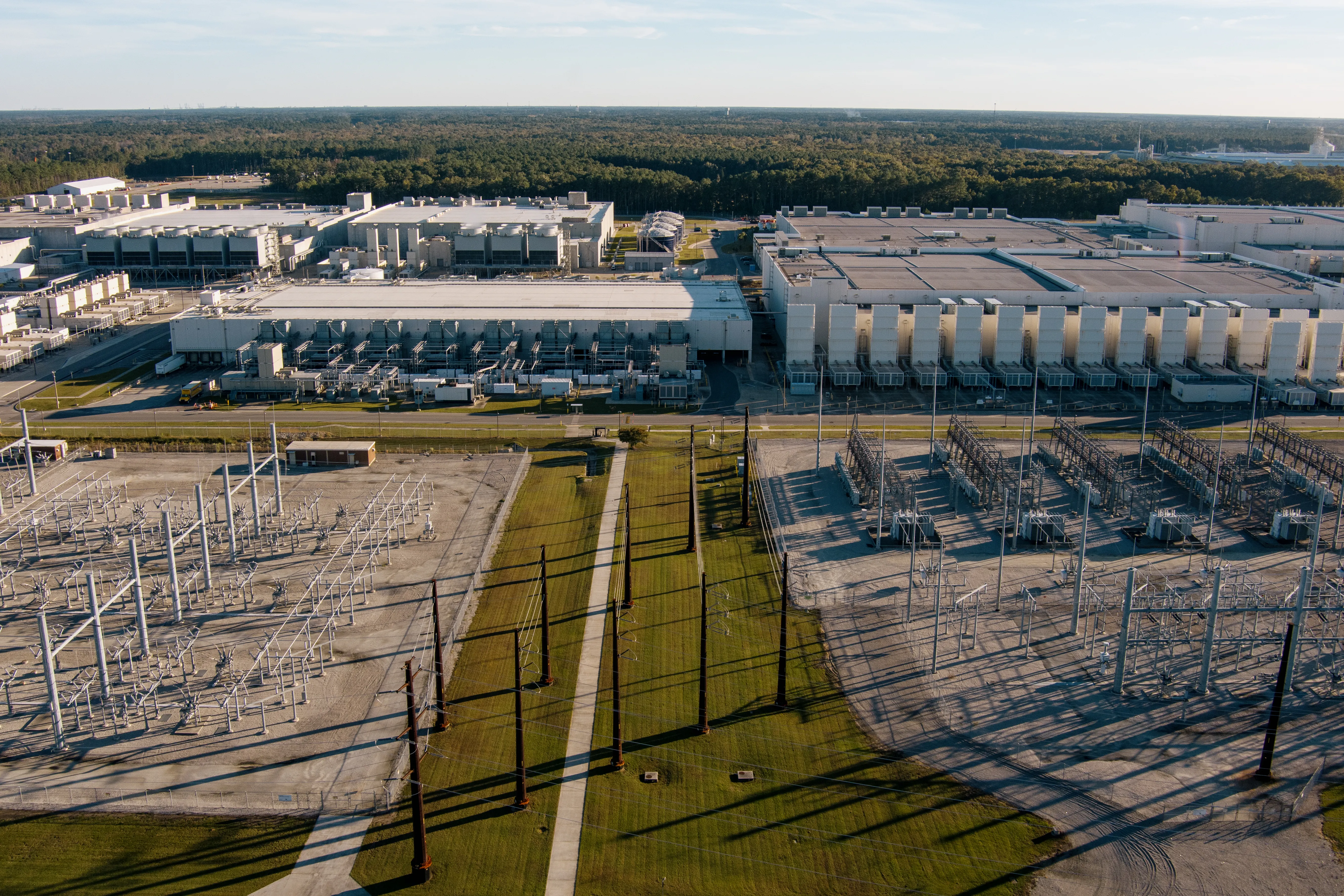
Why it matters
Google plans to invest $1.5 billion through 2027 to expand its Jackson County, Alabama data center campus on the former Widows Creek coal-plant site. The regional finance story is whether the company's pledged power-cost coverage, new generation commitments and local energy-efficiency fund can make a rural AI-infrastructure buildout grow without shifting costs to nearby households.
Google said it will invest $1.5 billion across 2026 and 2027 to expand its data center campus in Jackson County, Alabama, turning a former Tennessee Valley Authority coal-plant property near Bridgeport into a larger test of how rural AI infrastructure should pay for power, grid upgrades and local mitigation.
The company announced the expansion on June 15, and local outlets including WAFF, Alabama Political Reporter and Yellowhammer News reported the same core figures. The amount is large enough to matter on its own, but the more useful read for the Tennessee Valley is the structure around it: Google says it will pay for all electricity it uses, cover infrastructure costs directly driven by its operations, support more generation capacity and put $2 million into energy-efficiency work for local schools and income-qualified households.
That is the piece that separates this from a routine data-center investment story. Across North America, data centers are increasingly judged not only by capital spending or job counts, but by whether they leave households, utilities or local governments carrying the cost of the electric capacity, water planning and land-use effects needed to serve them. In Jackson County, Google is explicitly trying to answer that question before the expansion is finished.
| Item | Disclosed figure | Why it matters |
|---|---|---|
| Expansion investment | $1.5 billion across 2026 and 2027 | Sets the capital scale for the Jackson County campus buildout |
| Existing site investment | $2 billion-plus in Alabama since the original data-center project | Shows the new expansion is a follow-on phase, not an isolated announcement |
| New generation commitments | More than 300 MW contracted for the Tennessee Valley region, according to Google | Links data-center growth to added supply rather than only higher demand |
| Advanced nuclear checkpoint | Up to 50 MW from Kairos Power's Hermes 2 project through TVA, scheduled for 2030 | Creates a measurable future test for the local power strategy |
| Local energy fund | $2 million Energy Impact Fund with TVA and CAANEAL | Targets weatherization and energy-efficiency work for schools and income-qualified households |
| STEM commitment | $550,000 for Jackson County School District STEM kits | Connects the expansion to local workforce and education claims |
The power pledge is the economic mechanism
Google's announcement says the company will pay for 100% of the power it uses and cover infrastructure costs directly driven by new data-center operations. WAFF and Alabama Political Reporter both highlighted that point, and local coverage quoted Google representatives describing the approach as one meant to avoid raising costs for residential ratepayers.
The pledge matters because data centers bring a different economic footprint than many factories. They can generate heavy construction activity and high-skill operations work, but their permanent job count is often modest relative to their electric demand and tax-incentive value. That shifts the reader's key question from 'how much is being invested?' to 'who pays for the capacity that makes the investment possible?'
Google said the Jackson County campus began operating in 2019 on TVA's retired Widows Creek coal-plant site, where existing transmission lines and other infrastructure could be repurposed. That gives the site a distinctive regional logic: the economic development story is not a greenfield technology park, but a conversion of legacy energy infrastructure into a power-hungry digital facility.
Generation is the next checkpoint
The expansion also leans on future supply. Google said it has contracted to bring more than 300 megawatts of new generation capacity to the Tennessee Valley region. A 2025 agreement among Google, Kairos Power and TVA is the clearest measurable checkpoint: Kairos Power's Hermes 2 plant in Oak Ridge, Tennessee is scheduled to deliver up to 50 megawatts to the TVA grid that powers Google data centers in Tennessee and Alabama beginning in 2030.
That 50 megawatts will not cover every question raised by a $1.5 billion expansion, and the record does not establish the full future load of the Jackson County campus. But it does give readers a way to track whether the company's power strategy turns from promise into operating supply. If the TVA/Kairos project slips, the local ratepayer-protection argument becomes harder to evaluate; if it comes online as planned, Jackson County becomes part of a larger test of whether large technology buyers can help finance firm generation instead of only competing for existing grid capacity.
Local benefits are still partly conditional
Google says the expansion will build on hundreds of full-time jobs already supported by the campus and bring more than 1,000 contract workers during construction phases. Alabama Political Reporter and Yellowhammer News also reported local officials' expectation that hotels, restaurants, maintenance firms and other service providers would see business from the buildout. Those benefits are plausible, but they remain tied to construction timing, procurement decisions and how much of the operating work stays local.
The more concrete near-term local program is the $2 million Energy Impact Fund, which Google says will be run with TVA and the Community Action Agency of Northeast Alabama to support weatherization and energy-efficiency work for local schools and income-qualified households, primarily in Jackson County. The company also announced $550,000 for STEM kits for fourth- through eighth-grade students in the Jackson County School District.
Those are not substitutes for durable tax base, grid discipline or transparent resource reporting. They are, however, part of the economic bargain now attached to large data-center projects: a developer that requires major power capacity is being pushed to show direct local offsets, workforce pathways and a plan for energy demand before public patience wears thin.
What readers should watch
The first checkpoint is construction and hiring disclosure through 2027: whether local contractors, hotels, restaurants and maintenance vendors see the activity described in the announcement. The second is implementation of the Energy Impact Fund, including how many schools and households receive weatherization or efficiency upgrades and how quickly the money moves through CAANEAL and TVA partners.
The third checkpoint is power supply. Google has made the region's data-center growth legible by naming specific mechanisms: paying for its own power, covering directly driven infrastructure costs, contracting new generation, participating in demand response and pointing to a 2030 advanced-nuclear supply agreement. Those details make the Jackson County expansion economically important beyond the $1.5 billion headline. They also give Alabama households and local officials something concrete to measure as the campus grows.
Sources & further reading
- Google Strengthens Alabama Presence With New Data Center Investment, Community InitiativesGoogle
- Google expands Alabama data center campus, funds community effortsThe Keyword / Google
- Jackson County, Alabama - Google Data Center LocationGoogle Data Centers
- Google investing $1.5B more in Jackson County data center campus, adds energy and education initiativesWAFF 48
- Google plans $1.5 billion Jackson County data center expansionAlabama Political Reporter
- Google announces $1.5 billion Jackson County expansion, one of Northeast Alabama's largest investmentsYellowhammer News
- Google, Kairos Power, TVA Collaborate to Meet America's Growing Energy NeedsKairos Power
- Photo gallery - Google Data CentersGoogle Data Centers
Recommended reads

SBA's New $10 Million Loan Cap Helps Capital-Heavy Small Businesses Finance Growth
Eligible small businesses can now combine SBA 7(a) and 504 financing for up to $10 million after a new loan-limit policy took effect July 4. The change is most useful for established, capital-heavy firms that need both working capital and long-term financing for real estate or equipment.
Read analysis
June Home Sales Drop as Record Prices Keep Buyers on the Sidelines
Existing-home sales fell 2.4% in June even as the median U.S. resale price reached a record $440,600. The split matters for buyers, sellers and lenders because mortgage rates near 6.5% are keeping transaction volume weak while limited inventory continues to support prices.
Read analysis