

New Jersey's $79M retrofit grants turn building upgrades into a grid-capacity test
NJEDA approved $79 million in RETROFIT NJ awards for ten large building decarbonization projects across nine communities, using RGGI funds to support solar, battery storage, electrification and efficiency work tied to $238 million in projected economic activity.
Pending review
This article is in WireNorth's review workflow and may include AI-assisted research, drafting, or formatting. Pending articles are not eligible for search indexing until editor review is complete.
Editorial standards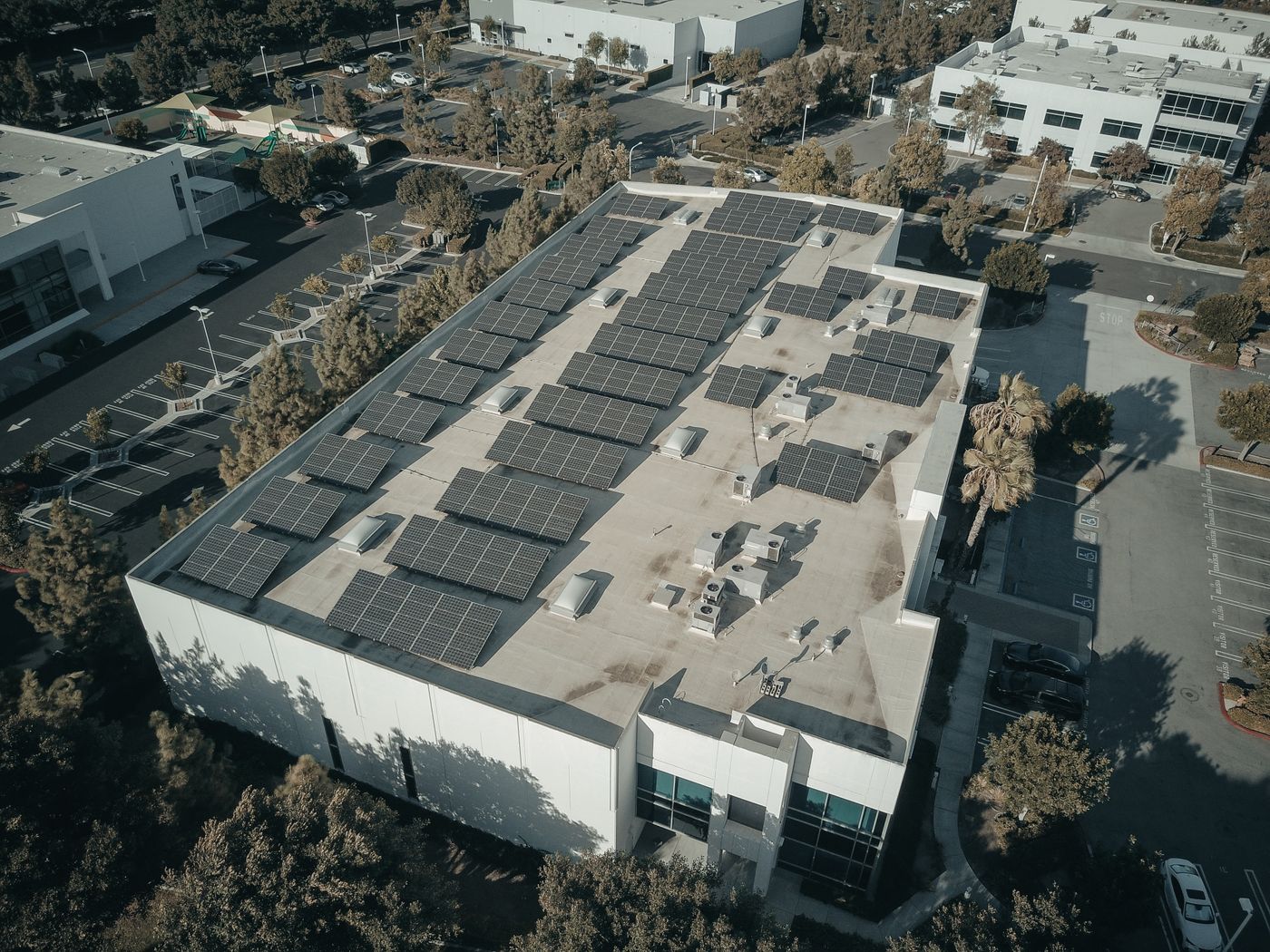
Why it matters
NJEDA approved $79 million in RETROFIT NJ awards for ten large building decarbonization projects across nine communities, using RGGI funds to support solar, battery storage, electrification and efficiency work tied to $238 million in projected economic activity.
New Jersey's economic development authority has approved $79 million in grants for ten large building retrofit projects, turning climate-program money into a practical test of whether older schools, casinos, public facilities, housing and industrial buildings can help relieve pressure on the state's electric system.
The New Jersey Economic Development Authority said its board approved the RETROFIT NJ awards on June 10, with projects spread across nine communities and funded through Regional Greenhouse Gas Initiative proceeds. NJBIZ independently reported the same award package, including the authority's estimate that the work will support $238 million in economic activity.
The useful story is not simply that New Jersey is spending on clean energy. The awards put public dollars behind a specific operating mechanism: on-site solar, battery storage, heat pumps, refrigerant replacement, efficiency upgrades and one thermal energy network. NJEDA says the package includes 20.3 megawatts of solar, 86.9 megawatts of battery storage and annual electricity-use reductions of 30.7 million kilowatt-hours.
| Measure | Disclosed figure | Why it matters |
|---|---|---|
| Total grant awards | $79 million | Shows a state-scale financing commitment, not a small pilot announcement |
| Projects | 10 projects in nine communities | Spreads the test across public, nonprofit, university, transit, casino and industrial buildings |
| Solar capacity | 20.3 MW combined | Adds distributed generation at existing building sites rather than only new utility-scale projects |
| Battery storage | 86.9 MW combined | Makes the package relevant to reliability and peak-demand management, not just emissions |
| Overburdened communities | $54 million directed to projects in those communities | Connects the funding to equity and local-cost questions, not only statewide climate targets |
The financing source is part of the story
RETROFIT NJ is funded by RGGI proceeds, according to the authority's program materials. That matters because the money is not a general corporate subsidy; it comes from a regional carbon-market framework and is being recycled into building systems that NJEDA says can reduce energy demand, lower costs and support grid reliability.
The program reimburses eligible hard and soft project costs, including design, engineering, equipment, construction and commissioning. That structure is important for large buildings because the hard part of decarbonization is often not buying one technology; it is packaging multiple systems into a project that can be financed, installed and operated without breaking the building's core use.
The awards show how that financing model is being applied. Camden County Vo-Tech in Sicklerville received $10 million for a 2.1 MW solar system, refrigerant replacement, efficiency upgrades and two EV charging stations. Resorts Casino Hotel in Atlantic City received about $8.8 million for a 2.1 MW solar system, a 16 MW storage system and building-management upgrades. X-L Plastics in Clifton received $10 million for a 47 MW storage system, refrigerant work, electrified rooftop and water-heating equipment, and efficiency upgrades.
Why it matters beyond the climate headline
The second-layer insight is that these grants are a demand-side infrastructure bet. New Jersey's 2024 Energy Master Plan says energy efficiency and building decarbonization are essential across its modeled pathways, and that prior utility-led programs have produced large electricity, natural-gas, bill and emissions reductions. The new awards test whether bigger, multi-measure retrofits can make existing buildings more useful grid assets.
That distinction is easy to miss. A rooftop solar project on a school, a battery at a casino or electrified heat at a transit facility does not carry the spectacle of a new power plant. But if the numbers hold, these projects reduce load, add local generation, shift energy use and cut operating exposure for buildings that already sit in dense parts of the state. That is why the capacity and storage figures matter as much as the emissions estimate.
The geographic spread also makes the package more than a Trenton policy item. Awards went to Sicklerville, Rockaway, Atlantic City, Plainfield, Newark, Jersey City, New Brunswick, Holmdel and Clifton. The recipients include a county vocational school, a church and care center, a casino hotel, a housing authority, Port Authority facilities, Rutgers, Bell Works and an industrial plastics company.
That mix matters economically because it tests whether decarbonization finance can reach buildings with very different balance sheets and operating constraints. A public school, a housing authority and an industrial manufacturer do not make capital decisions the same way. If the program works only for one class of owner, its statewide value is narrower. If it works across these settings, it gives New Jersey a replicable model for using carbon-market revenue to buy down complex building upgrades.
The public return depends on execution
The approved awards are not proof that the savings, emissions reductions or economic activity have already been realized. They are commitments tied to project delivery. Readers should treat the 30.7 million kilowatt-hours of expected annual electricity reduction and the more than 845,000 metric tons of carbon dioxide equivalent emissions reductions as authority estimates until the projects are built and measured.
That is the legal and financial caution around the story. NJEDA's figures are useful because they give the public measurable targets, but they are still projections. The next checkpoints are construction starts, procurement, interconnection progress, commissioning and public reporting on actual energy performance. For battery-heavy projects, the most important practical question is not just installed capacity, but how the storage is dispatched and whether it reduces peak strain when the grid needs help.
There is also a cost-allocation issue to watch. NJEDA says $54 million of the funding is directed to projects in overburdened communities. That gives the awards an equity rationale, but the public value will be clearest if lower operating costs, improved resilience or cleaner building systems are visible to residents, tenants, students, riders, workers or customers rather than remaining abstract program benefits.
What to watch next
The immediate checkpoint is whether NJEDA publishes project-level execution milestones after the awards move into contracting and construction. The agency's program page says grants can range from $2.5 million to $12.5 million and cover design through commissioning; that makes completion documentation and performance reporting central to judging whether the first large-scale cohort should be expanded.
For readers, the practical takeaway is that New Jersey is using a finite pot of carbon-market proceeds to make existing buildings carry more of the state's energy transition. The success measure is not the size of the press release. It is whether these ten projects deliver measurable electricity savings, usable storage, lower building energy exposure and a model that can be repeated without hiding costs or overstating benefits.
Sources & further reading
- NJEDA Board Approves $79M for Large-Scale Building Decarbonization Projects Through RETROFIT NJ ProgramNew Jersey Economic Development Authority
- NJEDA approves $79M for clean-energy retrofit projectsNJBIZ
- RETROFIT NJ ProgramNew Jersey Economic Development Authority
- 2024 New Jersey Energy Master PlanState of New Jersey
- Solar Panels on a RooftopPexels / Kindel Media
Recommended reads

SBA's New $10 Million Loan Cap Helps Capital-Heavy Small Businesses Finance Growth
Eligible small businesses can now combine SBA 7(a) and 504 financing for up to $10 million after a new loan-limit policy took effect July 4. The change is most useful for established, capital-heavy firms that need both working capital and long-term financing for real estate or equipment.
Read analysis
June Home Sales Drop as Record Prices Keep Buyers on the Sidelines
Existing-home sales fell 2.4% in June even as the median U.S. resale price reached a record $440,600. The split matters for buyers, sellers and lenders because mortgage rates near 6.5% are keeping transaction volume weak while limited inventory continues to support prices.
Read analysis