

America's Housing Market Is Thawing, but Affordability Is Still Blocking Buyers
Harvard's 2026 State of the Nation's Housing report shows why a modest pickup in home sales has not fixed the affordability problem. Existing-home sales rose in May and pending contracts improved, but prices, mortgage rates, construction costs and record renter cost burdens still leave many households unable to buy or rent comfortably.
Pending review
This article is in WireNorth's review workflow and may include AI-assisted research, drafting, or formatting. Pending articles are not eligible for search indexing until editor review is complete.
Editorial standards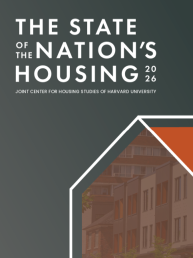
Why it matters
Harvard's 2026 State of the Nation's Housing report shows why a modest pickup in home sales has not fixed the affordability problem. Existing-home sales rose in May and pending contracts improved, but prices, mortgage rates, construction costs and record renter cost burdens still leave many households unable to buy or rent comfortably.
The U.S. housing market is showing signs of life, but the affordability problem has not gone away. That is the central tension in the new 2026 State of the Nation's Housing report from Harvard's Joint Center for Housing Studies.
The report, released this week, says persistent affordability pressure and rising economic uncertainty are hurting housing conditions. At the same time, fresh data from the National Association of Realtors show existing-home sales rose in May, pending home sales improved and inventory is no longer quite as scarce as it was during the tightest phase of the post-pandemic market.
The useful read for buyers, sellers, renters and investors is not simply that housing is improving or deteriorating. It is that demand is trying to come back at the same time the cost structure remains punishing. Mortgage rates are still above 6%, the median existing-home price is above $429,000, new construction costs remain elevated and a record number of renters are already cost burdened.
| Signal | Latest reading | Why it matters |
|---|---|---|
| Existing-home sales | 4.17 million annualized in May, up 3.2% month over month and year over year, according to NAR | The market is thawing, but sales are still near a low base compared with historical norms. |
| Median existing-home price | $429,300 in May, up 1.3% from a year earlier, according to NAR | Prices are still rising even as buyers remain sensitive to monthly payments. |
| Mortgage rates | 30-year fixed mortgage averaged 6.47% in Freddie Mac's latest survey, according to AP | Rates have eased from the prior week but remain high enough to limit affordability. |
| New construction | Housing starts fell 15.4% in May to a 1.177 million annual rate, Census/HUD data show | Builders are pulling back even though long-term supply needs remain unresolved. |
| Renter cost burdens | 22.7 million renter households were cost burdened in 2024, a record high, according to Harvard JCHS | Many would-be first-time buyers are starting from a weak savings position. |
Why the housing rebound is still fragile
NAR's May data show real improvement. Existing-home sales increased 3.2% from April and from a year earlier to a seasonally adjusted annual rate of 4.17 million. Pending home sales rose 3.8% month over month and 4.8% year over year, a sign that some buyers are adjusting to mortgage rates above 6%.
But a rebound from a depressed level is not the same as a healthy market. AP, citing Freddie Mac and housing data, noted that existing-home sales are still hovering close to a 4 million annual pace, well below a historical norm closer to 5.2 million. That gap matters because low transaction volume affects mortgage lenders, real estate brokers, movers, furniture retailers, remodelers and local tax bases tied to housing turnover.
The second-layer signal is that the market is being squeezed from both sides. Buyers are coming back because life events do not wait forever: families grow, jobs change, leases end and people relocate. Sellers, builders and landlords are still operating in a cost environment that makes meaningful price relief difficult. That is why modestly better sales can coexist with affordability stress.
The affordability math is still harsh
Harvard JCHS puts the affordability problem in plain numbers. The report says the median price of a new single-family home was $417,400 in 2025. At that price, a household would need roughly $120,000 of income to meet the standard affordability threshold, assuming a 30-year fixed mortgage, a 6.0% interest rate and a 3.5% down payment.
NAR's May snapshot shows the resale market has not given buyers much relief either. The median existing-home price reached $429,300, up 1.3% from a year earlier, while inventory stood at 1.55 million units, equal to 4.5 months of supply. More supply helps, but it has not yet translated into a broad reset in prices.
Mortgage rates are the pressure point buyers feel first. AP reported that the average 30-year fixed mortgage rate fell to 6.47% from 6.52% in Freddie Mac's latest weekly survey, helped by lower Treasury yields. That is a small weekly improvement, but not a return to the sub-6% window seen earlier in the year or the pandemic-era rates that shaped many household budgets.
Builders are not solving the shortage quickly
One reason affordability remains stubborn is that supply cannot be fixed quickly. Census and HUD data released June 16 showed privately owned housing starts fell 15.4% in May to a seasonally adjusted annual rate of 1.177 million. Building permits were steadier, down 0.7% to 1.413 million, but the starts decline shows builders are cautious.
Harvard JCHS also points to the cost side of construction. The report says combined residential construction input prices have jumped 40% since January 2020, with gypsum products up 47% and steel mill products up 84% through April 2026. Land has also become more expensive, with standardized lot values up 52% from 2020 to 2024.
That makes the policy answer more complicated than simply telling builders to build more. Additional supply is still needed, especially in constrained regions and lower-cost segments. But if land, labor, financing and materials remain expensive, new market-rate homes and apartments often arrive too costly for the households under the most pressure.
Renters are part of the buyer story
The rental market is not separate from the ownership market. Harvard JCHS says the number of cost-burdened renter households reached a record 22.7 million in 2024, including 12.1 million severely burdened households. The number of renter households with cost burdens has risen by 2.3 million since 2019.
That matters for home sales because renters are the first-time buyer pipeline. If a large share of renters is spending too much on housing, saving for a down payment becomes harder even when home listings increase. High rents can delay ownership, and delayed ownership can keep demand bottled up until rates or prices fall enough to unlock it.
The caveat is that national averages hide large regional differences. NAR's May data showed the West had the highest median existing-home price at $625,900, while the Midwest's median was $336,300. Harvard also notes that vacancy and supply conditions vary by region. A buyer in a market with rising inventory may have more negotiating power than a buyer in a tight Northeast metro where listings remain scarce.
What to watch next
The first checkpoint is whether pending home sales turn into closed sales during the summer. NAR's pending-sales increase suggests buyers are willing to move, but that momentum needs to show up in completed transactions before it can be called a durable recovery.
The second checkpoint is mortgage-rate direction. A sustained move below the mid-6% range would improve monthly-payment math quickly, while a return toward recent highs would test whether the May sales improvement was temporary. Watch the 10-year Treasury yield as well as Fed language, because mortgage rates follow bond-market inflation expectations more closely than the Fed funds rate alone.
The third checkpoint is construction. If permits hold up and starts rebound, buyers could see more options later. If builders stay cautious, the market may remain stuck in an uncomfortable middle: enough demand to keep prices firm, but not enough affordability to restore normal turnover. That is the housing market Harvard's report describes: no longer frozen, but still expensive enough to keep many households outside the door.
Sources & further reading
- The State of the Nation's Housing 2026Harvard Joint Center for Housing Studies
- The State of the Nation's Housing 2026 PDFHarvard Joint Center for Housing Studies
- NAR Existing-Home Sales Report Shows 3.2% Increase in MayNational Association of Realtors
- Pending Home SalesNational Association of Realtors
- Average 30-year U.S. mortgage rate falls to 6.47%, tracking lower bond yields as Iran war winds downAssociated Press
- New Residential Construction Press Release - May 2026U.S. Census Bureau and U.S. Department of Housing and Urban Development
- 7 takeaways from Harvard's 2026 state of housing reportSmart Cities Dive
Recommended reads

May Retail Sales Give Main Street Shops a Clearer Demand Signal
Official retail sales rose more than expected in May, giving many stores a steadier read on customer demand even as gasoline prices and fading tax refunds limit the relief.
Read analysis
Amrize's Saint-Constant Cement Upgrade Tests Quebec's Local Supply Bet
Amrize broke ground on a modernization of its Saint-Constant cement plant outside Montreal, with production capacity set to rise by 300,000 tonnes to 1.2 million tonnes a year. The regional finance angle is whether public decarbonization support and private industrial spending can expand Quebec-made cement supply as the province prepares a decade of infrastructure, transit, health-care and housing work.
Read analysis