

U.S. Housing Has a Demand Problem Even as Homes Stay Unaffordable
Harvard's 2026 State of the Nation's Housing report shows a market where high prices, mortgage rates and ownership costs are cooling demand before affordability has meaningfully improved. The shift matters for buyers, renters, builders, lenders and local governments because more inventory alone is not solving the lower-cost housing shortage.
Pending review
This article is in WireNorth's review workflow and may include AI-assisted research, drafting, or formatting. Pending articles are not eligible for search indexing until editor review is complete.
Editorial standards
Why it matters
Harvard's 2026 State of the Nation's Housing report shows a market where high prices, mortgage rates and ownership costs are cooling demand before affordability has meaningfully improved. The shift matters for buyers, renters, builders, lenders and local governments because more inventory alone is not solving the lower-cost housing shortage.
The U.S. housing market is no longer only a story about too little supply. A new Harvard Joint Center for Housing Studies report points to a more awkward phase: demand is weakening because households cannot afford to move, buy or rent up, while lower-cost housing remains scarce.
Harvard's 2026 State of the Nation's Housing report, released June 17, says existing-home sales are sitting near three-decade lows, household growth slowed for a third straight year in 2025, and high costs are keeping many would-be buyers and renters on the sidelines. That matters because a cooling market usually suggests relief is coming. In this case, the relief is uneven: vacancies are rising in some places, but ownership costs, rent burdens, taxes and insurance are still pressing household budgets.
The practical answer for readers is that more listings or softer rents do not automatically make housing affordable. Harvard's report estimates monthly costs on a median-priced home at about $3,120 in the fourth quarter of 2025, nearly double the level five years earlier, using a 30-year fixed-rate loan assumption and typical tax, insurance and mortgage-insurance inputs. Freddie Mac put the average 30-year fixed mortgage rate at 6.47% as of June 18, keeping financing costs high even after a small weekly decline.
| Signal | Latest reading | Why it matters |
|---|---|---|
| Monthly cost on a median-priced home | About $3,120 in Q4 2025, according to Harvard JCHS tabulations | Affordability remains tight even where listings have improved. |
| Mortgage rates | Freddie Mac's 30-year fixed-rate average was 6.47% on June 18 | Borrowing costs are still high enough to limit buyer budgets and refinancing relief. |
| Existing-home market | NAR reported May existing-home sales at a 4.17 million annual rate, up 3.2% from April, with a $429,300 median price | Activity improved in May, but prices remain near record highs and affordability is still the central constraint. |
| New construction | Census and HUD said May housing starts fell 15.4% from April to a 1.177 million annual rate | Builders are pulling back as demand weakens, which can slow future supply relief. |
| Low-cost rental shortage | Harvard cites NLIHC data showing 11 million extremely low-income renters competing for 3.8 million affordable and available homes | The deepest shortage is still at the bottom of the income scale, not in high-end units. |
Why weaker demand is not the same as affordability
In a normal market cycle, weaker demand can help buyers by slowing price growth and giving inventory time to rebuild. The complication now is that demand is weakening partly because households are financially pinned down. Harvard says household growth slowed to 1.1 million in 2025 after surging to a 2.0 million annual average in 2020 and 2021, while job growth, student debt stress and low consumer sentiment weighed on household formation.
That is a different kind of housing slowdown than one caused by abundant affordability. If young adults delay forming households, owners avoid moving because they do not want to give up old mortgage rates, and renters cannot absorb higher costs, then lower transaction volume can coexist with painful prices. The market looks cooler, but the financial pressure is still there.
NAR's May data shows the tension. Existing-home sales rose 3.2% from April and reached the highest level since December, but the median sales price was $429,300. NAR Chief Economist Lawrence Yun said affordability was improving at the margin, while also noting that the record-high May price reflected solid homeowner fundamentals and ongoing supply constraints.

The supply story is splitting by price and place
Harvard's report says supply has grown in important ways since 2022. Rental vacancy rates have moved up from historic lows, and for-sale vacancy rates have also recovered from extremely tight levels. In markets with heavy apartment construction, such as Austin, the report says apartment vacancies rose sharply and rents fell, while for-sale listings nearly tripled.
But that does not mean the country has built the housing lower-income households need. Harvard's takeaways say the rental stock gained over the last decade was exclusively higher-rent units, while the number of units renting for less than $1,000 fell by 7 million after adjusting for inflation. The report also says homes listed for sale that were affordable to households earning $75,000 or less in March 2026 were down 60% from March 2019, based on NAR/Realtor.com data.
This is the second-layer insight: the housing market can have more visible inventory and still have too little affordable inventory. A builder can cut prices on new homes, a landlord can offer concessions in one high-supply metro, and the national shortage for lower-income renters can still worsen if the new units sit above what households can pay.
Builders and lenders face a narrower margin for error
The new-construction data adds near-term risk. Census and HUD reported that privately owned housing starts fell 15.4% in May from April to a seasonally adjusted annual rate of 1.177 million, while starts were 8.7% below May 2025. The monthly figure is volatile, and the Census release includes wide confidence ranges, but it fits Harvard's broader point that construction is softening as unsold inventory and weak demand make new projects harder to justify.
For builders, that raises the cost of guessing wrong. Harvard says unsold new-home inventory reached 127,000 completed units in January 2026, the highest level since 2009, and that a record 41% of builders in a late-2025 NAHB/Wells Fargo survey reported reducing prices. If buyer traffic improves only because rates dip briefly, builders may remain cautious about starting projects that will not be finished for many months.
For lenders and mortgage borrowers, the constraint is still the payment. Freddie Mac said the 30-year fixed-rate mortgage averaged 6.47% as of June 18, down from 6.52% a week earlier and 6.81% a year earlier. That is meaningful, but it is not enough by itself to erase the price gains and non-mortgage ownership costs that have accumulated since 2020.
Who is affected first
First-time buyers face the most obvious squeeze because they have to absorb today's home prices, mortgage rates, insurance costs and property taxes without the benefit of an old low-rate mortgage or home equity. The same pressure can keep existing owners locked in place, reducing the flow of starter homes and making it harder for households to trade up or down.
Renters are affected differently. Business Insider, summarizing the Harvard report, noted that about half of renter households were cost-burdened in 2024, meaning they spent at least 30% of income on housing, and 26% were severely cost-burdened. Harvard's own takeaways say 83% of renters earning under $30,000 spent more than 30% of income on housing, and 66% spent more than half.
State and local governments are also pulled deeper into the problem. Harvard says federal retrenchment on several housing policies is pushing states and localities to look for zoning reforms, local financing tools and other ways to lower development costs. The caveat is that local reforms can improve feasibility, but deeply affordable units usually need subsidy because construction and operating costs are too high for low rents to cover.
What to watch next
The first checkpoint is mortgage-rate persistence. A one-week move lower helps headlines, but buyers need rates to remain lower long enough to change monthly payments and confidence. If the Fed's inflation fight keeps longer-term yields elevated, housing demand may stay fragile.
The second checkpoint is whether inventory growth appears at lower price points. More listings in expensive segments will not solve the problem highlighted by Harvard and NLIHC if households earning $75,000 or less still see fewer attainable homes than before the pandemic. Watch entry-level listings, smaller homes, townhomes and lower-rent apartments rather than only national inventory totals.
The third checkpoint is builder behavior after the May starts drop. If starts rebound quickly, the May decline may look like noise in a volatile series. If permits, starts and completions stay soft while costs remain high, today's affordability problem could become tomorrow's renewed supply shortage. That is the core risk in the Harvard report: the market can cool without becoming affordable, leaving households with fewer moves and policymakers with less time.
Sources & further reading
- The State of the Nation's Housing 2026Harvard Joint Center for Housing Studies
- Ten Takeaways from the 2026 State of the Nation's HousingHarvard Joint Center for Housing Studies
- Existing-Home SalesNational Association of Realtors
- Mortgage RatesFreddie Mac Primary Mortgage Market Survey
- Monthly New Residential Construction, May 2026U.S. Census Bureau and U.S. Department of Housing and Urban Development
- The Gap: A Shortage of Affordable HomesNational Low Income Housing Coalition
- The 3 biggest challenges US homeowners and renters are facing right nowBusiness Insider
- Low angle photography of steel framesUnsplash / Ricardo Gomez Angel
Recommended reads

May Retail Sales Give Main Street Shops a Clearer Demand Signal
Official retail sales rose more than expected in May, giving many stores a steadier read on customer demand even as gasoline prices and fading tax refunds limit the relief.
Read analysis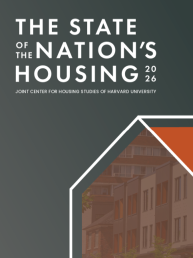
America's Housing Market Is Thawing, but Affordability Is Still Blocking Buyers
Harvard's 2026 State of the Nation's Housing report shows why a modest pickup in home sales has not fixed the affordability problem. Existing-home sales rose in May and pending contracts improved, but prices, mortgage rates, construction costs and record renter cost burdens still leave many households unable to buy or rent comfortably.
Read analysis