

STOP Payments Fraud Act Would Give Banks More Time to Hold Suspicious Checks and Wires
H.R. 9331 would give banks and credit unions more room to hold suspicious checks and incoming wires before funds are released, shifting a narrow but important part of U.S. payments policy toward fraud screening. The practical market question is whether institutions can use that extra time accurately enough to reduce losses without turning legitimate deposits into a customer-access problem.
Pending review
This article is in WireNorth's review workflow and may include AI-assisted research, drafting, or formatting. Pending articles are not eligible for search indexing until editor review is complete.
Editorial standards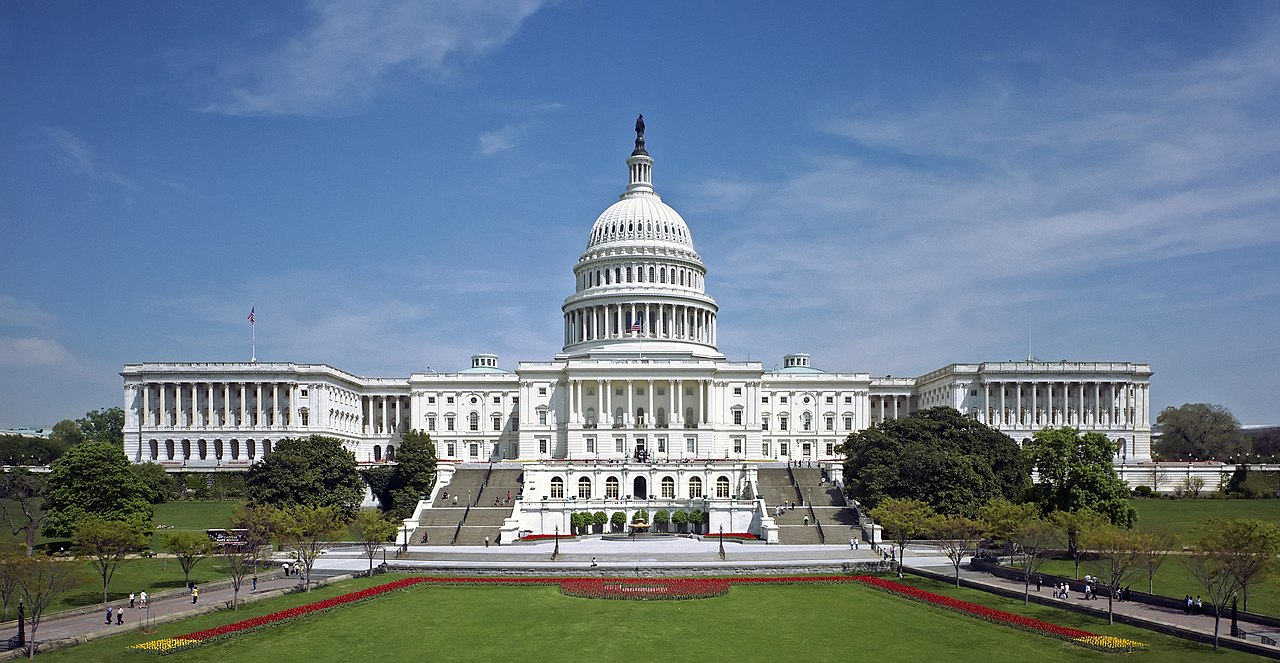
Why it matters
H.R. 9331 would give banks and credit unions more room to hold suspicious checks and incoming wires before funds are released, shifting a narrow but important part of U.S. payments policy toward fraud screening. The practical market question is whether institutions can use that extra time accurately enough to reduce losses without turning legitimate deposits into a customer-access problem.
The House Financial Services Committee ordered H.R. 9331, the STOP Payments Fraud Act of 2026, reported favorably by a 51-0 vote this week, moving a payments-fraud bill that would let financial institutions delay suspicious checks and wire-transfer credits under rules written by the Federal Reserve and the CFPB. The change matters for banks, credit unions, fintech fraud vendors and customers because it would alter a core operating trade-off in U.S. payments: how quickly money becomes available when the receiving institution sees fraud signals.
The bill is not a broad instant-payments overhaul. Its practical significance is narrower and more operational: it would give institutions more time to stop suspect check and wire activity before funds are released, while requiring notices and regulatory guardrails meant to limit unnecessary holds.
| Issue | Current pressure point | What H.R. 9331 would change |
|---|---|---|
| Certain official checks | Regulation CC gives next-day availability treatment to several check categories, including cashier's, certified and teller's checks when conditions are met. | BPI says the bill would permit regulators to move Treasury and cashier's checks from next-day to second-day availability. |
| Suspicious checks | Institutions can use existing exception holds, but industry groups argue current rules often force release before fraud reviews are complete. | The bill would create a fraud exception when a receiving institution has reasonable suspicion based on specific indicators. |
| Incoming wires | Wires are valued for speed and finality, which also gives fraud teams less time once funds hit the receiving account. | The bill would create an exception hold for wire transfers when the receiving bank has reasonable suspicion of fraud. |
| Consumer protections | Longer holds can block legitimate customers from using money they expected to be available. | AFC says the bill includes written notices, limits on class-based holds and joint Federal Reserve-CFPB rulemaking. |
What Changed
The committee record shows H.R. 9331 was ordered reported favorably as amended on July 1, with no recorded opposition. That does not make the bill law; it moves the measure toward possible House floor consideration.
The introduced bill text would amend the Expedited Funds Availability Act. For checks, it would let regulators create a fraud exception when the receiving depository institution has reasonable suspicion that a check is false, unauthorized or otherwise involves fraud. The bill says that suspicion must be based on indicators that would lead a reasonable person to suspect fraud, and the reasons would have to be included in the customer notice.
For wires, the bill would add a new exception for funds received by a depository institution when the institution has reasonable suspicion of fraud. Bank Policy Institute, which supported the bill after committee consideration, described the measure as allowing funds availability for check and wire transfers to be slowed when circumstances warrant.
Why the Timing Rule Matters
Funds availability sounds technical until a fraudulent deposit or wire leaves the receiving account. Regulation CC is built around a consumer-friendly principle: deposited funds generally should become available on a defined timetable, and some categories of checks get faster treatment. The Federal Reserve's Regulation CC guide notes that certain cashier's, certified and teller's checks can qualify for next-day availability, and that local checks generally must be available by the second business day.
That speed is useful for honest customers and small businesses. It is also useful to fraudsters when stolen, altered or synthetic-payment activity clears the risk screen after money has already moved. FinCEN said in 2024 that financial institutions filed 15,417 BSA reports tied to mail-theft-related check fraud in a six-month review period, amounting to more than $688 million in reported suspicious activity.
The FTC's latest fraud data adds another layer to the urgency. Consumers reported about $16 billion in fraud losses in 2025, the highest on record, with nearly $1 billion tied to business impersonators and about $920 million tied to government impersonators. H.R. 9331 does not solve that entire fraud market, but it targets a specific failure point: money becoming available before a financial institution can act on suspicious payment signals.
Who Gains Leverage
The clearest winners would be banks, credit unions and fraud-prevention vendors that can use a longer review window to stop suspect transactions before funds leave the account. For fintech infrastructure providers, the bill could increase demand for better check-risk scoring, wire anomaly detection, identity signals, case-management tools and customer-notice workflows.
The second-layer fintech angle is not that paper checks are suddenly modern. It is that legacy payment instruments increasingly need real-time risk infrastructure wrapped around them. If the law gives institutions more authority to hold suspicious funds, the competitive question shifts to which banks and processors can identify fraud accurately enough to use that authority without damaging legitimate customer access.
Customers and small businesses sit on both sides of the ledger. A delayed fraudulent deposit can prevent losses and account freezes. A delayed legitimate check or incoming wire can create payroll, rent, inventory or closing-table problems. That tension is why the consumer-protection details matter as much as the fraud exception itself.
The Limits and Open Questions
The bill still has to move through Congress, and the operational details would depend heavily on joint Federal Reserve and CFPB rulemaking. The most important unresolved issue is how regulators define reasonable suspicion in practice. If the standard is too loose, customers may face more holds and confusion. If it is too narrow, banks may still release funds before fraud teams can verify red flags.
There is also a data-quality problem. Fraud models can overflag new accounts, unusual transaction sizes, first-time counterparties, branchless banking patterns or customers with thin histories. AFC's support statement says the bill would prohibit holds based on any class of transactions or persons, but the market impact will depend on how examiners treat model governance, adverse customer impact and notice quality.
The measure also does not address every fast-money risk. Zelle, card-not-present transactions, ACH scams, crypto transfers and push-payment fraud have different rulebooks and liability structures. H.R. 9331 is a check-and-wire intervention, not a comprehensive U.S. scam-reimbursement regime.
Why This Matters Now
U.S. payments policy has spent years pushing toward faster availability, instant settlement and smoother digital access. Fraud pressure is now forcing a more uncomfortable question: where should the system deliberately slow down when risk signals are strong?
For operators, the practical takeaway is that fraud controls are becoming part of the payment product, not just a back-office compliance layer. A bank that uses holds accurately may prevent losses without alienating customers. A bank that uses them clumsily may turn fraud prevention into a customer-experience problem and a regulatory complaint risk.
For fintech vendors, the incentive is clear. If Congress and regulators give financial institutions more room to delay suspect funds, institutions will need better evidence, faster case review, cleaner disclosures and audit trails that explain why a hold was placed.
What To Watch Next
Watch whether H.R. 9331 receives House floor time, whether the Senate takes up a parallel measure, and whether consumer groups push for tighter limits on hold duration, notice language or error-resolution rights.
If the bill advances, the real market signal will come from Federal Reserve and CFPB rulemaking: the definition of reasonable suspicion, maximum hold periods, required evidence, customer-notice timing, overdraft-fee treatment, model-governance expectations and reporting obligations.
After implementation, the metrics to watch are measurable: fraud losses on checks and wires, false-positive hold rates, customer complaints, average release times, overdraft-fee disputes, and whether banks disclose improved recovery rates or simply report more operational friction.
Sources & further reading
- Markup of Various MeasuresU.S. House Committee on Financial Services
- H.R. 9331, Strengthening Transaction Oversight and Preventing Payments Fraud Act of 2026U.S. House of Representatives
- BPI Statement on House Financial Services Committee Markup and Consideration of H.R. 9331Bank Policy Institute
- American Fintech Council Strongly Supports Bipartisan Legislation to Modernize Credit Access and Combat Payments FraudAmerican Fintech Council
- A Guide to Regulation CC ComplianceFederal Reserve
- FinCEN Issues In-Depth Analysis of Check Fraud Related to Mail TheftFinancial Crimes Enforcement Network
- FTC Data Show People Reported Losing $3.5 Billion to Imposter Scams in 2025Federal Trade Commission
- File:United States Capitol west front edit2.jpgWikimedia Commons
Recommended reads

July Minimum-Wage Raises Give Workers a Clear Paycheck Checkpoint
Alaska, Oregon, the District of Columbia, California health care employers and more than 20 local jurisdictions have July 1 minimum-wage changes. The raises are targeted rather than nationwide, but they give covered workers a concrete pay floor to check and give small employers a practical payroll deadline.
Read analysis
Weak June Jobs Report Gives Markets a Rate-Risk Reset
The U.S. added just 57,000 jobs in June, well below expectations, while unemployment slipped to 4.2% as labor-force participation fell. Markets treated the report as a reason for the Federal Reserve to stay patient, sending the Dow to a record close even as the details showed a narrower, more cautious labor market.
Read analysis